Best Headphones Under $300: 7 Spec-Based Picks
As an Amazon Associate we earn from qualifying purchases. Links on this page are affiliate links.
Finding the right headphones under 300 requires evaluating key hardware specs that match your routine. You can explore 7 options here, compared strictly using the specifications published on their product listings.
The Bose QuietComfort Over-Ear Wireless Headphones take position one because they provide 24 hours of battery life alongside multi-point wireless pairing. The remaining options cover lightweight bone conduction designs, planar magnetic drivers, and up to 30 hours of runtime. This comparison helps you decide which form factor, weight, and connection standard best serve your everyday audio setup.
Quick picks
The best fit for you
- You switch between multiple wireless devices during travel. Bose QuietComfort Over-Ear Wireless Headphones Multi-point wireless pairing and 24-hour battery life provide continuous multi-device playback.
- You run outdoors and need situational awareness. SHOKZ OpenRun Bone Conduction Headphones The bone conduction design and IP67 waterproof rating provide open-ear awareness during workouts.
- You need maximum battery life for daily work. Sony WH-1000XM5 Wireless Noise-Canceling Headphones The 30-hour listening specification offers the longest wireless playback duration on this list.
- You play games at a dedicated desktop setup. ASUS ROG Kithara Open-Back Headphones The 100mm planar magnetic drivers and wired open-back design target stationary PC setups.
Our 7 picks

Bose QuietComfort Over-Ear Wireless Headphones
Best for: all-day travel and multi-device wireless switching
- Noise Cancellation
- Quiet Mode, Aware Mode, passive
- Form Factor
- Over Ear
- Battery Life
- Up to 24 hours
- Connectivity
- Bluetooth, audio cable
- Dimensions
- 3.15 × 6.18 × 7.68 inches
- Weight
- 8.32 ounces
View on Amazon: Bose QuietComfort Over-Ear Wireless Headphones (paid link)
These Bose QuietComfort Over-Ear Wireless Headphones combine active noise cancellation with Quiet and Aware modes. You get up to 24 hours of battery life on a single charge, plus a 15-minute quick charge for 2.5 hours of playback. At 0.52 pounds, the design features multi-point Bluetooth pairing and an adjustable three-band EQ. They suit you if you need reliable wireless over-ear listening with a backup wired microphone connection.
Pros
- Up to 24 hours of battery life on a single charge
- Fast 15-minute charge delivers up to 2.5 hours of playtime
- Audio cable with in-line microphone works even when battery is drained
- Multi-point Bluetooth switching between paired devices
- Lightweight 0.52-pound over-ear build
Cons
- Renewed product condition rather than factory new
- Offers only two listed listening modes (Quiet and Aware)
- No water or sweat resistance rating specified
Good fit if
- You want up to 24 hours of wireless battery life with fast-charging support.
- You need a wired backup cable that functions without battery power.
- You frequently switch between two Bluetooth source devices.
Skip if
- You prefer buying brand-new items over renewed hardware.
- You need certified water resistance for heavy sweat or rain.
Verdict: Bose QuietComfort Over-Ear Wireless Headphones provide 24 hours of battery life, adjustable EQ control, and multi-point wireless pairing. The included audio cable ensures you can keep listening even if the battery runs out.

SHOKZ OpenRun Bone Conduction Headphones
Best for: outdoor runners needing situational awareness
- Form Factor
- Open-ear
- Battery Life
- 8 hours
- Connectivity
- Bluetooth
- Water Resistance
- IP67
- Recommended Use
- Sports, Workout, Running
- Color
- Blue
View on Amazon: SHOKZ OpenRun Bone Conduction Headphones (paid link)
The SHOKZ OpenRun delivers wireless bone conduction audio through a wraparound frame that keeps your eardrums open to your environment. You get an IP67 waterproof build with a moisture detection alert, eight hours of battery life, and a ten-minute quick charge that adds 1.5 hours of playback. It suits you if you run or work out outdoors and need continuous situational awareness without placing earbuds inside your ears.
Pros
- Open-ear bone conduction leaves your eardrums open to surroundings
- IP67 waterproof rating with moisture detection charging alert
- Eight-hour battery life with a 10-minute quick charge for 1.5 hours
- Featherweight wraparound frame weighing approximately 0.11 pounds
Cons
- Not suitable for swimming despite IP67 rating
- Open-ear design provides no noise isolation
Good fit if
- You need situational awareness while running or working out outdoors.
- You want an IP67 waterproof build for sweat and weather exposure.
- You prefer bone conduction to avoid placing earbuds in your ears.
Skip if
- You need headphones designed for swimming.
- You want noise isolation to block ambient sound.
Verdict: SHOKZ OpenRun Bone Conduction Headphones provide open-ear listening with an IP67 waterproof rating and quick charging. They stand out among the 7 picks on this list if you prioritize workout safety and situational awareness.

Sony WH-1000XM5 Wireless Noise-Canceling Headphones
Best for: all-day listening and multi-device office work
- Noise Cancellation
- Noise Canceling, Auto NC Optimizer
- Battery Life
- Up to 30 hours
- Connectivity
- Wireless, Multipoint
- Color
- Black
- Dimensions
- 8.85 × 3.03 × 10.4 inches
- Weight
- 8.82 ounces
View on Amazon: Sony WH-1000XM5 Wireless Noise-Canceling Headphones (paid link)
The Sony WH-1000XM5 Wireless Noise-Canceling Headphones are over-ear wireless headphones built for daily listening. You get eight microphones powered by two processors with an Auto NC Optimizer to manage ambient sound. The battery delivers up to 30 hours of playback, while quick charging adds three hours from three minutes. Built-in multipoint pairing lets you switch devices quickly, making this ideal if you work across multiple screens.
Pros
- Up to 30-hour battery life with 3-minute quick charging for 3 hours of playback
- Eight microphones controlled by two processors with Auto NC Optimizer
- Multipoint connection support for switching between devices
- Four beamforming microphones for hands-free calls
Cons
- No IP rating for sweat or water resistance specified
- No wired backup cable listed in included accessories
Good fit if
- You need long battery life with rapid top-up charging.
- You switch playback frequently between two connected devices.
Skip if
- You need certified water resistance for sports or rain.
- You prefer physical control buttons over touch controls.
Verdict: Sony WH-1000XM5 Wireless Noise-Canceling Headphones deliver up to 30 hours of listening and dual-processor noise reduction in a lightweight 0.55-pound frame. They are a dependable choice if you manage multiple devices and value fast charging.

Bose QuietComfort Ultra Over-Ear Headphones
Best for: immersive spatial sound and adjustable noise cancellation
- Noise Cancellation
- Quiet Mode, Aware Mode, Immersion Mode
- Form Factor
- Over-The-Ear
- Battery Life
- Up to 24 hours
- Connectivity
- Bluetooth 5.3
- Audio Features
- Spatial audio, Bose Immersive Audio
- Microphone
- Microphone
View on Amazon: Bose QuietComfort Ultra Over-Ear Headphones (paid link)
These over-ear Bose QuietComfort Ultra headphones feature spatial audio with Bose Immersive Audio and CustomTune technology. You get active noise cancellation across Quiet, Aware, and Immersion modes, paired with Bluetooth 5.3 connectivity up to 30 feet. Battery runtime reaches 24 hours in standard listening or 18 hours with spatial audio active. At 8.96 ounces with touch earcups, this pair suits you if you prioritize multidimensional sound and adjustable isolation.
Pros
- Spatial audio with Bose Immersive Audio and CustomTune technology
- Three listening modes covering Quiet, Aware, and Immersion
- Up to 24 hours of playback with 15-minute quick charging
- Bluetooth 5.3 wireless connection with SimpleSync compatibility
Cons
- Battery life drops to 18 hours when Immersive Audio is active
- Wireless operating range is limited to 30 feet
Good fit if
- You want spatial audio combined with personalized sound profiling.
- You need selectable noise-cancelling modes for different sound environments.
- You sync audio directly with a Bose smart soundbar.
Skip if
- You need more than 18 hours of continuous spatial audio playback.
- You require wireless connectivity beyond a 30-foot range.
Verdict: Bose QuietComfort Ultra Spatial Audio Headphones deliver personalized sound and active cancellation across three distinct modes. They provide 24 hours of playback and head-motion power controls in an 8.96-ounce build.

SHOKZ OpenFit Pro Open-Ear Earbuds
Best for: Awareness-focused workouts and multipoint office calls
- Noise Cancellation
- Open-Ear Noise Reduction
- Form Factor
- Open-ear
- Battery Life
- Up to 12h (50h total), 6h NR on
- Connectivity
- Bluetooth 6.1
- Driver Size
- 11 × 20 mm
- Water Resistance
- IP55
View on Amazon: SHOKZ OpenFit Pro Open-Ear Earbuds (paid link)
The SHOKZ OpenFit Pro is a pair of open-ear earbuds built with flexible ear hooks and 11 × 20 mm dual-diaphragm drivers. You get Bluetooth 6.1 connectivity, Dolby Atmos with head tracking, and up to 12 hours of playback per charge with noise reduction off. It suits you if you need environmental awareness during workouts or daily calls without giving up multipoint pairing, spatial audio, and wireless case charging.
Pros
- Up to 12 hours playback per charge and 50 hours total with the case
- Dolby Atmos with head tracking and 11 × 20 mm dual-diaphragm drivers
- Bluetooth 6.1 with multipoint pairing across two devices
- IP55 water and dust resistance with physical button controls
Cons
- Battery life drops to 6 hours when open-ear noise reduction is enabled
- IP55 rating resists splashes and dust but does not support submersion
Good fit if
- You want an open-ear fit with ear hooks that lets you stay aware of surroundings.
- You need multipoint pairing and Bluetooth 6.1 for switching between two devices.
- You want wireless charging case compatibility and fast 10-minute top-ups.
Skip if
- You need complete passive noise isolation or deep over-ear active cancellation.
- You need fully submersible waterproof protection for swimming.
Verdict: SHOKZ OpenFit Pro Open-Ear Earbuds pair an unsealed acoustic design with Dolby Atmos head tracking and modern Bluetooth 6.1 connectivity. They deliver long overall battery life and clear triple-mic calls while keeping your ear canals open to surrounding sounds.
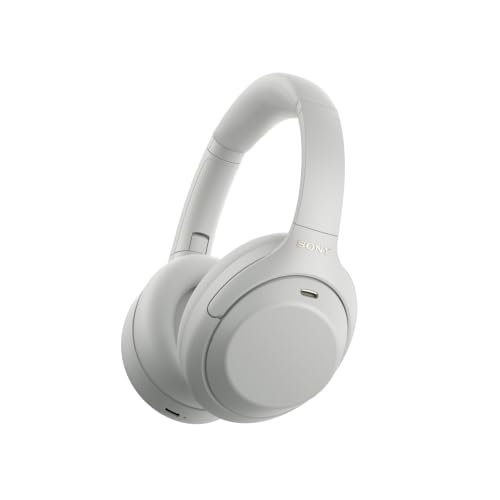
Sony 1000X Foldable Noise-Canceling Headphones
Best for: commuters wanting high-resolution wireless audio and portability
- Noise Cancellation
- Active Noise Cancelling
- Battery Life
- Up to 27 hours
- Connectivity
- Bluetooth
- Audio Features
- DSEE Extreme, LDAC
- Dimensions
- 8 × 3 × 9 inches
- Weight
- 8.92 ounces
View on Amazon: Sony 1000X Foldable Noise-Canceling Headphones (paid link)
The Sony WH-1000XM4C Noise-Canceling Headphones feature active noise cancellation, LDAC codec compatibility, and DSEE Extreme upscaling. You receive up to 27 hours of runtime, three-minute fast charging, and two-device Bluetooth multipoint pairing. Weighing 8.92 ounces with a collapsible frame and included case, they suit you if you want detailed equalization controls and compact portability for daily travel.
Pros
- Up to 27 hours of battery life with 3-minute quick charging for 1 hour of playback
- LDAC high-resolution codec support and DSEE Extreme audio upscaling
- Multipoint Bluetooth connectivity for pairing two devices simultaneously
- Foldable 8.92-ounce frame with an included carrying case
Cons
- 27-hour maximum playback time is shorter than several competing over-ear models
- No official IP water or dust resistance rating provided
Good fit if
- You travel frequently and require a folding over-ear design with a dedicated case.
- You stream high-resolution audio using compatible LDAC hardware.
- You switch audio playback regularly between two Bluetooth sources.
Skip if
- You require more than 27 hours of continuous listening per charge.
- You need sweat- or water-resistant hardware for workouts or wet environments.
Verdict: Sony WH-1000XM4C Noise-Canceling Headphones combine active noise reduction with LDAC support and a foldable design. They offer reliable audio fidelity and dual-device connectivity for everyday travel.

ASUS ROG Kithara Open-Back Headphones
Best for: wired desktop gaming with planar magnetic audio
- Form Factor
- Open-back
- Connectivity
- Wired, 4.4 mm, 3.5 mm, 6.3 mm, USB-C
- Driver Size
- 100 mm
- Recommended Use
- Gaming
- Microphone
- Microphone
- Driver Type
- Planar Magnetic
View on Amazon: ASUS ROG Kithara Open-Back Headphones (paid link)
The ASUS ROG Kithara is an open-back wired headset built for stationary gaming and listening. It pairs large 100mm planar magnetic drivers with an eight-level adjustable headband and an 11.2-ounce frame. You connect via included 4.4mm, 3.5mm, 6.3mm, or USB-C plugs, while voice input runs through a full-band boom microphone. It suits you if you prioritize wide acoustic separation at a desk.
Pros
- 100mm planar magnetic drivers
- Eight-level adjustable headband with metal frame and hinges
- Four connection options: 4.4mm balanced, 3.5mm, 6.3mm, and USB-C
- On-cable full-band MEMS boom microphone with 20Hz–20kHz response
- Open-back architecture for natural channel separation
Cons
- Wired-only design without Bluetooth connectivity
- Open-back earcups do not block ambient room sound
Good fit if
- You want planar magnetic drivers with an eight-level adjustable headband.
- You need versatile wired plugs for 4.4mm, 3.5mm, 6.3mm, or USB-C ports.
- You use a boom microphone for voice communication at a desk.
Skip if
- You require wireless portability for listening on the go.
- You need passive sound isolation or active noise cancellation in shared spaces.
Verdict: ASUS ROG Kithara Open-Back Wired Headphones delivers desktop versatility with 100mm planar drivers and multiple plug standards. Its eight-level adjustable headband and open-back structure make it an exact match for dedicated wired desk setups.
Specifications side by side
| Spec | Bose QuietComfort Over-Ear Wireless Headphones | SHOKZ OpenRun Bone Conduction Headphones | Sony WH-1000XM5 Wireless Noise-Canceling Headphones | Bose QuietComfort Ultra Over-Ear Headphones | SHOKZ OpenFit Pro Open-Ear Earbuds | Sony 1000X Foldable Noise-Canceling Headphones | ASUS ROG Kithara Open-Back Headphones |
|---|---|---|---|---|---|---|---|
| Noise Cancellation | Quiet Mode, Aware Mode, passive | not specified | Noise Canceling, Auto NC Optimizer | Quiet Mode, Aware Mode, Immersion Mode | Open-Ear Noise Reduction | Active Noise Cancelling | not specified |
| Form Factor | Over Ear | Open-ear | not specified | Over-The-Ear | Open-ear | not specified | Open-back |
| Battery Life | Up to 24 hours | 8 hours | Up to 30 hours | Up to 24 hours | Up to 12h (50h total), 6h NR on | Up to 27 hours | not specified |
| Connectivity | Bluetooth, audio cable | Bluetooth | Wireless, Multipoint | Bluetooth 5.3 | Bluetooth 6.1 | Bluetooth | Wired, 4.4 mm, 3.5 mm, 6.3 mm, USB-C |
| Driver Size | not specified | not specified | not specified | not specified | 11 × 20 mm | not specified | 100 mm |
| Water Resistance | not specified | IP67 | not specified | not specified | IP55 | not specified | not specified |
| Audio Features | not specified | not specified | not specified | Spatial audio, Bose Immersive Audio | Dolby Atmos with head tracking | DSEE Extreme, LDAC | not specified |
| Recommended Use | not specified | Sports, Workout, Running | not specified | not specified | not specified | not specified | Gaming |
| Acoustic Design | not specified | not specified | not specified | not specified | not specified | not specified | Open-Back |
| Microphone | not specified | not specified | not specified | Microphone | not specified | not specified | Microphone |
| Driver Type | not specified | not specified | not specified | not specified | not specified | not specified | Planar Magnetic |
| Color | Cypress Green | Blue | Black | White Smoke Renewed | Black | Platinum Silver | Black |
| Dimensions | 3.15 × 6.18 × 7.68 inches | 9.45 × 27.2 × 0.98 inches | 8.85 × 3.03 × 10.4 inches | 2 × 5.5 × 7.7 inches | 1.9 × 1.8 × 2.01 inches | 8 × 3 × 9 inches | 6.7 × 10.2 × 4.3 inches |
| Weight | 8.32 ounces | 1.83 ounces | 8.82 ounces | 8.96 ounces | 3.5 ounces | 8.92 ounces | 11.2 ounces |
| Size | Regular | Standard Size+Magnetic Charging (Pack of 2) | One Size | Regular | Standard | not specified | not specified |
| Model | 884367-0300-cr | S803 | XM5BK | 880066-0200-cr | SHOKZ T010 | WH1000XM4C/S | A702 ROG KITHARA/BLK |
Spec Trade-Offs For Choices Under $300
Choosing headphones Under $300 requires balancing specific hardware configurations against missing capabilities. You cannot get every feature in a single model. If you prioritize open-back planar drivers or bone-conduction designs, you give up active noise reduction. Wireless battery life caps at 30 hours, with standard runtimes resting at 24 hours. Furthermore, water resistance ratings are uncommon across the list, with only workout-oriented bone-conduction hardware providing an IP67 rating.
- Battery life: Total playback caps at 30 hours, with 24 hours being common.
- Water resistance: Ingress protection is limited to an IP67 rating on a single sports model.
- Connectivity: Dedicated planar magnetic hardware is strictly wired and omits Bluetooth.
- Acoustic design: Open-ear and open-back headphones exclude active noise reduction.
If you need backup power specifications for your workspace, you can examine runtime and wattage figures in the generator under 300 coverage.
How We Selected These Headphones
This guide gathers 7 headphones from Amazon listings matching Under $300. All details come directly from published manufacturer specifications, without physical handling. To keep comparisons straightforward, you will see only one size or variant from each product family.
Products are ordered with products in stock first, then by Amazon sales rank, placing better-selling products first. Listings update daily, so options move in or out of this guide as catalog details change. You can use these verified specs to identify the exact design, battery life, and connectivity that match your listening routine.
Choosing Your Next Pair of Headphones
-
Check Headphone Physical Weight
Examine the listed weight before you decide on a model for long sessions. Total weight directly influences neck comfort during prolonged use. Lightweight sport models can weigh as little as 1.83 ounces, while structured desktop gear reaches higher numbers. For example, the ASUS ROG Kithara weighs 11.2 ounces due to its physical build and planar driver housing. If you sit at a desk, higher mass is manageable, but mobile routines demand lighter frames. Compare product weight specifications closely to ensure the hardware matches your daily wearing habits.
-
Verify Ingress Protection Ratings
Check the published ingress protection rating if you plan to exercise outdoors or sweat heavily. Many standard over-ear models do not specify water resistance, leaving internal components unprotected against moisture. Sports-specific hardware lists exact ingress data. For instance, the SHOKZ OpenRun lists an IP67 waterproof rating along with sweatproof protection. This ingress rating suits outdoor runners exposed to rain and sweat. If you need headphones strictly for office work, unrated enclosures are acceptable. Always verify the water resistance attribute against your primary workout environment.
-
Inspect Backup Cable Inclusions
Look for a detachable audio cable if you rely on wireless hardware during extended travel. Wireless models depend on rechargeable batteries, but battery depletion can halt your listening abruptly. Certain models include physical audio cords to preserve playback flexibility. For example, the Bose QuietComfort Over-Ear Wireless Headphones come with an audio cable so you can continue listening even when the battery runs out. If you frequent long flights or lack quick access to chargers, verify whether the package includes a wired bypass cable.
-
Review Wireless Codec Capabilities
Examine wireless codec specifications if transmission fidelity is your top priority. Basic Bluetooth protocols compress audio data, which can reduce detail across complex tracks. High-resolution codecs allow higher bitrates over compatible wireless connections. The Sony 1000X Foldable Noise-Canceling Headphones support the LDAC codec for high-resolution wireless streaming. If your source device supports advanced codecs, choosing hardware with matching codec specifications ensures you receive uncompressed bandwidth. Confirm that both your playback device and headphones support the exact codec listed on the spec sheet.
-
Evaluate Spatial Sound Hardware
Check for dedicated spatial audio hardware if you want immersive directionality in your media. Standard stereo drivers deliver fixed left and right channels without directional tracking. Advanced options integrate spatial processing and sensors directly into the headphones. The Bose QuietComfort Ultra Over-Ear Headphones offer spatial audio alongside head-motion power controls. This feature suits listeners who watch movies or consume mixed media requiring directional depth. Review the audio features specification to confirm whether spatial processing functions on board or requires external software processing.
-
Assess Bluetooth Protocol Generation
Check the specific Bluetooth version to ensure connection stability and range. Older standards like Bluetooth 5.0 provide basic wireless operation, whereas modern revisions improve connection efficiency. For instance, the SHOKZ OpenFit Pro Open-Ear Earbuds feature Bluetooth 6.1 connectivity. If you pair headphones across modern laptops and mobile phones, newer Bluetooth standards provide optimal transmission protocols. Compare the Bluetooth revision in the connectivity spec to guarantee compatibility with your latest transmitting devices and minimize signal drops during daily use.
Frequently asked questions
Can you use wireless headphones with an audio cable if the battery runs out?
Yes, certain wireless models include an auxiliary cable for wired operation. For instance, the Bose QuietComfort Over-Ear Wireless Headphones come with an included audio cable. This cord allows you to continue listening even after its 24-hour battery runs out. In contrast, sports designs like bone conduction units do not support an analog cable input.
Which Bluetooth version is available on modern open-ear earbuds?
Current open-ear options feature up to Bluetooth 6.1 for wireless streaming. The SHOKZ OpenFit Pro Open-Ear Earbuds list Bluetooth 6.1 connectivity alongside Dolby Atmos head tracking. This specification handles your wireless connection while supporting triple-mic call clarity. You gain modern wireless connectivity without sealing off surrounding sounds.
What driver size can you get in a wired open-back gaming headset?
You can find large 100mm planar magnetic drivers in dedicated wired desktop models. The ASUS ROG Kithara features 100mm planar drivers inside an open-back headband housing. It comes equipped with an integrated microphone, an eight-level adjustable headband, and multiple plug standards for your desk setup. Planar diaphragms utilize flat conductors across a wide magnetic surface instead of standard dynamic cones.
What high-resolution wireless audio codecs are supported on foldable travel headphones?
High-resolution wireless models frequently feature LDAC codec transmission. The Sony 1000X Foldable Noise-Canceling Headphones specify LDAC support to transfer audio over a wireless link. Alongside this codec, they feature active noise reduction, dual-device connectivity, and a foldable structure for packing. This setup transmits higher bitrates from compatible sources while you commute.
What is the difference between bone conduction and open-ear earbud designs?
Bone conduction sends sound vibrations through your cheekbones, while open-ear earbuds direct air-conducted sound from tiny external speakers. The SHOKZ OpenRun uses bone conduction transducers with an IP67 rating at 1.83 ounces. Meanwhile, the SHOKZ OpenFit Pro weighs 3.5 ounces and relies on open acoustic drivers with Dolby Atmos head tracking. Both keep your ear canal completely unsealed.
How do spatial audio headphones track head movement?
Spatial audio models use built-in motion sensors to detect orientation and adjust sound positioning in real time. For example, the Bose QuietComfort Ultra Over-Ear Headphones include spatial audio processing alongside head-motion power controls and three cancellation modes. Similarly, the SHOKZ OpenFit Pro incorporates Dolby Atmos head tracking. These sensors monitor your physical movement to keep audio sources anchored around you.
How much battery life do wireless noise-canceling headphones provide?
Wireless noise-canceling headphones in this category typically provide between 24 and 30 hours of playback on a single charge. The Bose QuietComfort and Bose QuietComfort Ultra both deliver 24 hours of run time. If you need more operating time, the Sony WH-1000XM5 offers up to 30 hours of listening alongside dual-processor noise reduction and quick charging support.