Best Dynamic Headphones in 2026: 3 Picks Ranked by Specs
As an Amazon Associate we earn from qualifying purchases. Links on this page are affiliate links.
Choosing dynamic headphones requires evaluating key hardware specifications such as driver configuration, acoustic design, and connectivity options. The Yinyoo KZ ZST Hybrid Wired IEM takes the top spot because it combines a hybrid dual-driver dynamic setup with a detachable 3.5mm wired cable.
This guide compares 3 products strictly using the specifications published on their listings. Examining these attributes helps you decide whether wired in-ear monitors, open-back studio headphones, or wireless active noise-cancelling earbuds best match your listening needs.
Our top pick: Sennheiser HD 650 Open-Back Dynamic Headphones.
Quick picks
| # | Product | Best for | Price |
|---|---|---|---|
| 1 | Sennheiser HD 650 Open-Back Dynamic Headphones Best overall | critical hi-res dynamic listening in quiet spaces | Check price of Sennheiser HD 650 Open-Back Dynamic Headphones on Amazon |
| 2 | Sennheiser HD 400 PRO Open-Back Headphones Best budget | studio mixing and desktop audio production | Check price of Sennheiser HD 400 PRO Open-Back Headphones on Amazon |
| 3 | Neumann Open-Back Dynamic Studio Headphones Best premium | studio mixing in quiet listening environments | Check price of Neumann Open-Back Dynamic Studio Headphones on Amazon |
The best fit for you
- You want open-back dynamic headphones for desktop listening Sennheiser HD 650 Open-Back Dynamic Headphones This over-ear model features an open-back acoustic design paired with Hi-Res Audio support.
Our 3 picks

Sennheiser HD 650 Open-Back Dynamic Headphones
Best for: critical hi-res dynamic listening in quiet spaces
- Driver Type
- Dynamic (what this guide is about)
- Form Factor
- Over ear - Open Back
- Connectivity
- 3.5 millimetre jack plug
- Audio Features
- Hi-Res Audio
- Dimensions
- 12.4 × 10 × 4.33 inches
- Weight
- 9.12 ounces
View on Amazon: Sennheiser HD 650 Open-Back Dynamic Headphones Affiliate link
The Sennheiser HD 650 is an over-ear open-back headphone built with matched dynamic drivers. It features a wide frequency response of 10 to 41,000 Hz, specialized acoustic silk damping, and a low total harmonic distortion of 0.05 percent. Weighing 0.57 pounds and utilizing a standard 3.5 mm jack, it suits you if you need wide-bandwidth hi-res dynamic audio playback in a dedicated, quiet home listening environment.
Pros
- Wide frequency response spanning 10 Hz to 41,000 Hz
- Low total harmonic distortion rated at 0.05 percent
- Hand-selected matched dynamic driver elements
- Lightweight over-ear build at 0.57 pounds
Cons
- Open-back earcups provide no passive noise isolation
- Wired 3.5 mm connection offers no wireless Bluetooth operation
Good fit if
- You want dynamic over-ear headphones with hi-res frequency extension up to 41,000 Hz.
- You listen in quiet spaces where open-back sound leakage is acceptable.
Skip if
- You need acoustic isolation or active noise cancellation to block ambient sounds.
- You want wireless Bluetooth connectivity for portable use on the go.
Verdict: Sennheiser HD 650 Over-Ear Open-Back Headphones deliver high-resolution dynamic audio with 0.05 percent THD and an extended 41,000 Hz upper limit. They provide accurate desktop listening if you do not require noise isolation or wireless freedom.

Sennheiser HD 400 PRO Open-Back Headphones
Best for: studio mixing and desktop audio production
- Driver Type
- Dynamic (what this guide is about)
- Form Factor
- Open Back
- Connectivity
- 1/8” cable, 1/4” adaptor
- Recommended Use
- Studio
- Color
- Black
- Dimensions
- 10.6 × 7.8 × 4.37 inches
View on Amazon: Sennheiser HD 400 PRO Open-Back Headphones Affiliate link
Sennheiser HD 400 PRO Open-Back Headphones are dynamic-driver studio headphones built with an open-back acoustic design. At approximately 0.53 pounds, the lightweight frame is designed for all-day mixing and audio production. You receive both a single-sided coiled cable and an additional straight cable in the box. With angled transducers engineered for low distortion at high SPL, this wired set suits you if you need dedicated reference gear for studio desks.
Pros
- Includes both a coiled cable and a separate straight cable
- Lightweight frame weighing approximately 0.53 pounds
- Angled dynamic transducers designed for low distortion at high SPL
- Open-back acoustic design providing a spacious soundstage
Cons
- Open-back design naturally allows ambient noise leakage
- Wired configuration with no wireless or Bluetooth capability listed
- No integrated microphone or inline media controls provided
Good fit if
- You need open-back dynamic headphones for studio mixing and editing.
- You want interchangeable coiled and straight single-sided cables.
- You prefer a lightweight 0.53-pound build for extended desktop sessions.
Skip if
- You require passive sound isolation for noisy listening environments.
- You want wireless portability or integrated headset controls.
Verdict: Sennheiser HD 400 PRO Open-Back Headphones provide a lightweight open-back dynamic listening setup optimized for mixing and studio monitoring. The included coiled and straight cables ensure practical connectivity for workstation desks.
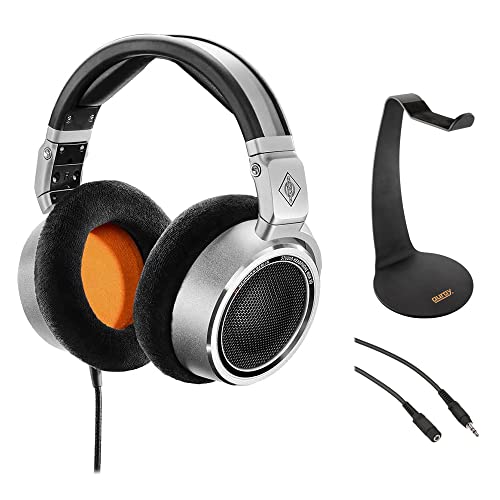
Neumann Open-Back Dynamic Studio Headphones
Best for: studio mixing in quiet listening environments
- Driver Type
- Dynamic (what this guide is about)
- Form Factor
- Open-Back
- Connectivity
- 3.5 mm
- Recommended Use
- Studio
- Color
- Black
View on Amazon: Neumann Open-Back Dynamic Studio Headphones Affiliate link
The Neumann Open-Back Dynamic Studio Headphones are wired reference headphones built for studio mixing and listening. They feature dynamic drivers paired with an open-back acoustic design to provide high spatial resolution. A detachable internally balanced cable connects directly to your setup, while the foldable frame makes storage simple. You also receive a desktop headphone stand in the bundle. This setup suits you if you need transparent audio monitoring in quiet studio environments.
Pros
- Open-back acoustic design paired with dynamic drivers
- Detachable internally balanced cable
- Foldable construction for easy transport
- Includes desktop headphone stand in bundle
Cons
- Open-back design leaks sound and lacks passive isolation
- Wired connection only with no wireless capability
Good fit if
- You mix or monitor audio in a dedicated studio room.
- You want a detachable balanced cable and a foldable frame.
- You need an included desktop stand for workstation storage.
Skip if
- You work in noisy spaces requiring passive sound isolation.
- You prefer wireless Bluetooth connectivity on the go.
Verdict: Neumann Open-Back Dynamic Studio Headphones provide reference-grade dynamic drivers, a detachable balanced cable, and a desktop stand for studio mixing. Their open-back design prioritizes spatial resolution over external noise isolation.
Specifications side by side
| Spec | Sennheiser HD 650 Open-Back Dynamic Headphones | Sennheiser HD 400 PRO Open-Back Headphones | Neumann Open-Back Dynamic Studio Headphones |
|---|---|---|---|
| Form Factor | Over ear - Open Back | Open Back | Open-Back |
| Connectivity | 3.5 millimetre jack plug | 1/8” cable, 1/4” adaptor | 3.5 mm |
| Audio Features | Hi-Res Audio | not stated | not stated |
| Recommended Use | not stated | Studio | Studio |
| Acoustic Design | Open-Back | Open-Back | Open-Back |
| Driver Type | Dynamic | Dynamic | Dynamic |
| Color | Gray | Black | Black |
| Dimensions | 12.4 × 10 × 4.33 inches | 10.6 × 7.8 × 4.37 inches | not stated |
| Weight | 9.12 ounces | 8.47 ounces | not stated |
| Size | Over ear - Open Back | not stated | One Size |
| Model | 508825 | 700047 | NDH 30 |
Is a Dynamic Driver Setup Worth It?
Dynamic drivers handle sound reproduction across diverse configurations, from single diaphragms to multi-driver hybrid systems. In daily use, this driver type gives you low total harmonic distortion, reaching 0.05 percent in reference open-back models, alongside extended frequency ceilings up to 41,000 Hz. In-ear options use dedicated polymer diaphragms or dual-magnetic structures to deliver targeted deep bass response. Choosing a dynamic design allows you to select between studio mixing headsets with detachable cables or compact earbuds engineered with IPX5 moisture protection.
Worth it if
- You want hardware tuned for deep bass response using dual-magnetic dynamic drivers or ultra-thin diaphragms.
- You need multi-driver configurations, such as dual dynamic units or hybrid dynamic-planar systems.
Skip it if
- You seek an entirely planar acoustic design without dynamic drivers in the signal path.
- You prefer sound reproduction handled solely by balanced armature drivers rather than moving dynamic diaphragms.
How We Ranked Dynamic Headphones
You will find 3 dynamic driver headphones in this 2026 guide. Every model is identified by checking published specifications and product titles for dynamic driver technology. Listings that do not explicitly state dynamic drivers are excluded. To keep choices distinct, each product family features only one representative size or variation. No items are physically handled or tested.
Products are organized strictly by availability and sales metrics. You see products in stock first, then by Amazon sales rank (better-selling products first). Pricing and inventory update automatically on the live page so you always view current hardware specifications.
How to Choose the Best Dynamic Headphones
-
Check Water Resistance Ratings
Verify the ingress protection rating if you plan to exercise or use headphones outdoors. Standard dynamic drivers lack protection against moisture and sweat unless the manufacturer certifies the housing. If you need hardware for workouts or running, look for dedicated sweatproof ratings like IPX5. The MEE audio M6 Sport features an IPX5 water resistance rating that protects the internal dynamic components from sweat during intense exercise. Unrated models should remain in dry, indoor environments to prevent moisture damage to the driver housing.
-
Inspect Modular Cable Hardware
Check whether the dynamic headphone uses fixed wiring or a detachable cable connector. Fixed cables require complete unit replacement if the wire breaks near the plug or strain relief. Modular connections, such as industry-standard MMCX interfaces, let you swap damaged cables without discarding the dynamic drivers. The DCMEKA Dual Dynamic Driver In-Ear Monitors use detachable MMCX cables, which simplifies maintenance and lets you switch to aftermarket cables. Choose detachable connections if you want longer hardware longevity or prefer custom cord lengths for specific workstation setups.
-
Review Microphone Specifications
Check the product size and specifications to confirm whether an in-line microphone is included. Many dynamic audio monitors omit microphones to maintain dedicated audio transmission paths. If you intend to take calls or use voice communication while playing games, choose a listing specifying an integrated microphone. The CCA Wired Dynamic In-Ear Monitors are specified as having no mic, making them suited strictly for media playback and monitoring. If your setup requires voice input, choosing a mic-free model will require buying a separate external microphone or a compatible communication cable.
-
Evaluate Hardware Weight Specs
Compare weight specifications before selecting a dynamic headphone model. In-ear monitors typically weigh less than 0.1 pounds, resting directly inside the ear canal with minimal neck strain during transport. Over-ear studio models are significantly heavier due to larger headband assemblies and structural housings. For example, the Sennheiser HD 400 PRO weighs 0.529 pounds, trading ultralight portability for over-ear studio monitoring comfort at a desk. If you need portable audio for travel, prioritize low-weight in-ear designs. Choose heavier over-ear builds only if you listen primarily at a stationary desk or studio workstation.
-
Assess Noise Cancellation Methods
Identify whether you need active noise cancelling or passive noise isolation. Active noise cancellation uses internal microphones and powered processing to neutralize external frequencies, while noise isolation relies solely on silicone ear tips sealing your ear canal. If you commute in loud environments, look for active noise cancelling specs with decibel reduction ratings. The CMF by Nothing Buds 2a provides 42dB hybrid active noise cancellation for high-noise areas. If you prefer unpowered listening without battery limits, choose passive noise-isolating hardware instead, which blocks background noise through physical ear tip insertion alone.
Frequently asked questions
Which dynamic headphones include detachable MMCX cables?
The DCMEKA Dual Dynamic Driver In-Ear Monitors and BASN Bmaster Triple Driver In-Ear Monitors both feature detachable MMCX cables. This connector standard lets you replace damaged cables without replacing the driver housings. It also allows you to swap cords for balanced terminations or alternative lengths without altering internal acoustic components.
Do wired dynamic in-ear monitors require external power or batteries?
No, wired dynamic in-ear monitors do not require batteries or external charging. Models like the CCA Wired Dynamic In-Ear Monitors and YINYOO KBEAR draw the small electrical current they need directly through the 3.5 mm audio jack. You can listen continuously without managing battery life or carrying charging cases.
What is a hybrid planar dynamic in-ear monitor?
A hybrid planar dynamic monitor combines dynamic drivers with planar transducers inside the same housing. The BASN Hybrid Planar Dynamic In-Ear Monitors use this configuration inside a hybrid metal and resin shell. The dynamic driver handles low-frequency reproduction, while the planar unit handles high frequencies through a dedicated silver-plated wired connection.
Which dynamic models include interchangeable audio cables for studio desks?
The Sennheiser HD 400 PRO Open-Back Headphones come equipped with both coiled and straight cables for audio workstation use. This modular setup lets you switch between a compact coiled wire at your desk or a longer straight run. The Neumann NDH 30 also includes a detachable balanced audio cable.
Do all dynamic in-ear monitors come with built-in microphones?
No, many dynamic monitors omit microphones entirely to prioritize clean audio feeds. For example, the CCA CRA+, DCMEKA A09B-HG01, and YINYOO KBEAR are specified as no-mic wired hardware. If you need two-way communication for calls or gaming, the Yinyoo KZ ZST includes a 3.5 mm cable with an integrated microphone.
Can dynamic headphones feature wireless Bluetooth connectivity?
Yes, dynamic drivers operate in both wired and wireless designs. While 3 picks in this guide feature analog cables, the CMF by Nothing Buds 2a wireless earbuds use dynamic drivers over a Bluetooth connection. This architecture eliminates physical cord snagging and pairs dynamic hardware with 42dB hybrid active noise cancellation.
What diaphragm materials do dynamic in-ear monitors use?
Dynamic monitors use various diaphragm builds depending on the design specs. The CCA Wired Dynamic In-Ear Monitors feature a thin 3.8-micrometer dual-magnetic diaphragm, whereas the CCA CRA+ utilizes an ultra-thin polymer diaphragm. These lightweight membranes vibrate in response to electromagnetic signals to move air and reproduce audio across frequencies.