Form Factor in Headphones: What It Is and Is It Worth It?
As an Amazon Associate we earn from qualifying purchases. Links on this page are affiliate links.
Headphone Form Factor Explained
The form factor is the physical design that determines how headphones sit on or in your head. It dictates comfort, sound isolation, and portability. You will see specific labels on product listings. These labels help you choose the right style for your daily routine. Here is what each common type means for you.
Over-ear headphones feature large cushions that fully enclose your ears. They usually offer the best noise isolation. The drivers are larger, which often provides deeper bass. They can feel heavy during long sessions. You should check the clamping force if you wear glasses.
In-ear models, or earbuds, fit directly inside the ear canal. They are small and lightweight. This makes them ideal for running or commuting. They rely on silicone or foam tips to seal the ear. A proper seal is critical for good bass response. If the fit is loose, sound quality drops significantly.
Bone conduction headphones rest on your cheekbones. They bypass the eardrum entirely. Sound travels through the skull to the inner ear. This keeps your ear canals open. You remain aware of traffic and surroundings. This is a safety feature for runners. However, they typically lack deep bass frequencies.
Open-ear designs sit outside the ear canal. They do not block ambient noise. They provide a natural listening experience. You can hear conversations while listening to music. They are less likely to cause ear fatigue. They offer less isolation than over-ear models.
Headband styles refer to the band structure. Some are rigid, others are flexible. The band determines how the weight is distributed. A padded headband reduces pressure on the top of your head. Understanding form factor explained helps you match the device to your activity. You prioritize either isolation or awareness based on the design.
Headphone Form Factor Options Compared
Over-Ear
Over-Ear headphones feature large cushions that fully enclose your ears. This design creates a seal around the ear cup, which improves passive noise isolation. You get a spacious fit that distributes weight across the headband. The Bose QuietComfort Wireless Over-Ear Headphones use this style for deep bass and noise cancellation. They weigh 8.4 ounces and measure 7.68 inches in height. This form factor suits long listening sessions. The trade-off is bulk. They are less portable than smaller designs and can feel warm during extended use in hot weather.
In-Ear
In-Ear headphones, often called earbuds, sit inside the ear canal. They use silicone or foam tips to create a tight seal. This seal blocks external noise physically. You get a secure fit that stays in place during movement. The compact size makes them highly portable. They fit easily in small pockets or cases. Many models include wireless connectivity and long battery life. This style is ideal for commuting or casual listening. The trade-off is comfort for some users. Extended wear can cause ear fatigue. The seal also reduces ambient awareness, which can be unsafe when walking near traffic.
Bone Conduction
Bone conduction headphones rest on your cheekbones, just in front of the ear canal. They transmit sound vibrations through the skull directly to the inner ear. Your ear canal remains open to the environment. The SHOKZ OpenRun Pro 2 Mini weighs only 1.06 ounces. This design provides situational awareness, which is critical for runners and cyclists. You can hear traffic and other hazards while listening to music. The trade-off is sound quality. Bass response is limited because vibrations cannot replicate low frequencies as effectively as air-conducted sound. Isolation is also minimal.
Open-Ear
Open-Ear headphones sit outside the ear canal, typically on the outer ear or cheek. They do not block the ear canal. This allows you to hear your surroundings naturally. The Soundcore V20i Open-Ear True Wireless Earbuds use this approach. They weigh 2.69 ounces and feature an adjustable design. This style is best for outdoor activities where safety is a priority. You stay aware of your environment while enjoying audio. The trade-off is sound leakage. Others nearby may hear your music if the volume is high. Sound isolation is also poor, making them less suitable for noisy public transport.
Headband
Headband headphones integrate speakers into a fabric or foam band that wraps around your head. The MUSICOZY Bluetooth Sleep Headband uses this form factor. It weighs 2.88 ounces and is designed for side sleepers. The flat profile prevents discomfort when lying down. You get wireless audio without bulky ear cups. This style is specialized for sleeping or relaxation. The trade-off is audio fidelity. The speakers are small and close to the skin, limiting dynamic range. Battery life is often shorter due to the compact design. They are not suitable for standing or active movement.
Is Form Factor Worth Your Attention
Who needs it
You should prioritize form factor if your daily routine demands specific physical characteristics. Over-ear models provide essential passive noise isolation for commuters or office workers who need to block out ambient chatter without active cancellation. In-ear options are ideal for runners or gym-goers who need secure, lightweight gear that stays put during vigorous movement. Bone conduction is critical for cyclists or runners who must remain aware of traffic and surroundings for safety. Open-ear designs suit users who want to listen to audio while still hearing environmental cues, such as when walking in busy areas. If you frequently travel, the compact nature of in-ear buds offers significant portability benefits. Headband styles provide stability for active use. Your lifestyle dictates which physical design serves you best, so match the form factor to your primary activity rather than just sound quality.
Who can skip it
You can ignore form factor details if you are buying for someone else as a gift and lack information about their usage habits. It is also less relevant if you are purchasing purely for stationary listening in a quiet home environment where comfort is subjective and easily adjusted. Users who already own multiple pairs for different activities may not need to analyze this spec closely. Instead, prioritize sound signature, driver size, or active noise cancellation performance if you care about audio fidelity above physical fit. If you are replacing a broken pair and want an exact match, stick to the previous model rather than exploring new form factors. Focus on battery life or connectivity standards if those are your main concerns. The physical design is secondary if you are not sensitive to weight or ear pressure. Buy based on core audio performance if you are unsure about fit preferences.
Headphone Form Factor Glossary
Over-ear
Large cups fully enclose your ears. This design creates a seal for passive noise isolation. It distributes weight across the headband for a spacious fit during long listening sessions.
In-ear
Small drivers sit inside your ear canal. These offer portability and secure fit. They provide passive isolation by blocking external sound physically without needing active electronic cancellation features.
On-ear
Smaller cups rest directly on your ears. This style is more compact than over-ear models. It offers moderate isolation but may cause pressure during extended wear for some users.
Passive isolation
Noise reduction achieved through physical design. Seals around ears or in canals block ambient sound. This method works without batteries or active electronic processing to dampen external noise.
Active noise cancellation
Electronics use microphones to detect outside noise. The system generates inverse sound waves to cancel them. This requires battery power and works best against steady low-frequency sounds like engines.
Open-back
The ear cups have vents or grilles. Sound escapes outward, and ambient noise enters. This creates a natural, spacious soundstage. It is ideal for quiet home use rather than travel.
Closed-back
The ear cups are solid and sealed. This design prevents sound leakage and blocks outside noise. It provides better isolation for commuting or office use compared to open-back designs.
Clamping force
The pressure the headband exerts on your head. Strong force improves isolation but may cause discomfort. Loose force reduces pressure but might let more ambient sound in during use.
Quick picks
| # | Product | Best for | Price |
|---|---|---|---|
| 1 | Bose QuietComfort Wireless Over-Ear Headphones | noise cancellation and long sessions | Check price of Bose QuietComfort Wireless Over-Ear Headphones on Amazon |
| 2 | SHOKZ OpenRun Pro 2 Mini Bone Conduction Headphones | Runners needing situational awareness | Check price of SHOKZ OpenRun Pro 2 Mini Bone Conduction Headphones on Amazon |
| 3 | Soundcore V20i Open-Ear True Wireless Earbuds | outdoor activities requiring situational awareness | Check price of Soundcore V20i Open-Ear True Wireless Earbuds on Amazon |
| 4 | MUSICOZY Bluetooth Sleep Headband | Side sleepers needing flat wireless audio | Check price of MUSICOZY Bluetooth Sleep Headband on Amazon |
| 5 | Beats Studio Pro Wireless Over-Ear Headphones | Travelers needing long battery life and ANC | Check price of Beats Studio Pro Wireless Over-Ear Headphones on Amazon |
| 6 | SHOKZ OpenRun Air 2 Bone Conduction Headphones | Runners needing situational awareness | Check price of SHOKZ OpenRun Air 2 Bone Conduction Headphones on Amazon |
Our 6 picks

Bose QuietComfort Wireless Over-Ear Headphones
Best for: noise cancellation and long sessions
- Form Factor
- Over-Ear (what this guide is about)
- Noise Cancellation
- Quiet and Aware Modes
- Battery Life
- Up to 24 hours
- Connectivity
- Bluetooth Multipoint, wired
- Audio Features
- Deep Bass
- Dimensions
- 3.15 × 6.18 × 7.68 inches
View on Amazon: Bose QuietComfort Wireless Over-Ear Headphones Affiliate link
These over-ear headphones combine active noise cancellation with passive comfort. You get Quiet and Aware modes to control your environment. The battery lasts up to 24 hours, with a quick charge adding 2.5 hours. Adjustable EQ lets you tune bass, mids, and treble. Multipoint Bluetooth connects to multiple devices. The plush cushions and padded band suit long listening sessions.
Pros
- Quiet and Aware noise cancellation modes
- 24-hour battery life with quick charge
- Multipoint Bluetooth connectivity
- Adjustable EQ for sound tuning
- Plush earcup cushions for comfort
Cons
- Heavier at 8.4 ounces
- Larger dimensions than in-ear options
- No water resistance rating listed
Good fit if
- You need active noise cancellation
- You want all-day battery life
- You prefer plush over-ear comfort
Skip if
- You need lightweight in-ear buds
- You require water resistance
- You want bone conduction technology
Verdict: Bose QuietComfort Over-Ear Headphones fit you if you prioritize noise cancellation and comfort for long sessions. They are ideal for focused listening in noisy environments.

SHOKZ OpenRun Pro 2 Mini Bone Conduction Headphones
Best for: Runners needing situational awareness
- Form Factor
- Bone Conduction (what this guide is about)
- Battery Life
- 12 hours
- Connectivity
- Bluetooth
- Water Resistance
- IP55
- Audio Features
- 3D audio
- Recommended Use
- Sports, Running
View on Amazon: SHOKZ OpenRun Pro 2 Mini Bone Conduction Headphones Affiliate link
The SHOKZ OpenRun Pro 2 Mini combines bone conduction with air conduction drivers for 3D audio. This open-ear design keeps you aware of your surroundings while delivering leak-free listening. It features a secure fit with memory wire and 12 hours of battery life. The compact Mini size weighs just 1.06 ounces. It suits runners who need situational awareness and clear calls in windy conditions.
Pros
- Dual bone and air conduction drivers for 3D audio
- Open-ear design for environmental awareness
- 12-hour battery life
- Wind-resistant microphones filter 96.5% of background noise
Cons
- Shorter 12-hour battery life compared to over-ear competitors
- No wired connectivity option listed
- Requires app for EQ customization
Good fit if
- You run outdoors and need to hear traffic
- You prefer open-ear comfort for long sessions
- You want a lightweight, secure fit for sports
Skip if
- You need deep, isolated bass in noisy environments
- You require all-day battery life over 12 hours
- You prefer closed-back noise cancellation
Verdict: The SHOKZ OpenRun Pro 2 Mini is a lightweight option for runners who prioritize safety and situational awareness over deep sound isolation. Its hybrid driver system offers clear audio without blocking out the world.

Soundcore V20i Open-Ear True Wireless Earbuds
Best for: outdoor activities requiring situational awareness
- Form Factor
- Open-Ear (what this guide is about)
- Battery Life
- 36 hours
- Connectivity
- Bluetooth 5.4
- Driver Size
- 16 mm
- Water Resistance
- IP55
- Audio Features
- Spatial Audio
View on Amazon: Soundcore V20i Open-Ear True Wireless Earbuds Affiliate link
The Soundcore V20i uses an open-ear design to keep your surroundings audible. It features 16mm titanium-coated drivers and four microphones with AI enhancement for calls. The earbuds offer four adjustable positions for a secure fit and support Spatial Audio via the soundcore app. This wireless option suits users who prioritize situational awareness and all-day comfort during outdoor activities.
Pros
- Open-ear design maintains situational awareness
- 16mm titanium-coated drivers with BassUp technology
- Four microphones with AI call enhancement
- Adjustable fit with four rotation positions
- Supports Spatial Audio and app control
Cons
- No active noise cancellation listed in specs
- Open design does not isolate external noise
- Battery life duration not specified in data
Good fit if
- You need to hear traffic or surroundings
- You prefer non-intrusive earbuds for all-day wear
- You want customizable sound via the app
Skip if
- You require deep noise isolation
- You need active noise cancellation
- You prefer in-ear tips for secure fit
Verdict: Soundcore V20i Open-Ear Earbuds fit active users who need to stay aware of their environment while listening to music. The adjustable design and app features make it a solid choice for outdoor use.

MUSICOZY Bluetooth Sleep Headband
Best for: Side sleepers needing flat wireless audio
- Form Factor
- Headband (what this guide is about)
- Battery Life
- Up to 15 hours
- Connectivity
- Bluetooth 5.4
- Driver Size
- 40 mm
- Water Resistance
- Sweat-resistant
- Recommended Use
- Sports, Workout, Sleeping, Running, Side Sleepers
View on Amazon: MUSICOZY Bluetooth Sleep Headband Affiliate link
This MUSICOZY headband replaces bulky over-ear designs for side sleepers. It uses Bluetooth 5.4 and 40 mm drivers to deliver stereo sound directly to your ears. The lightweight 2.88 ounce build sits flat against your pillow. You get up to 15 hours of battery life from a single charge. The elastic, sweat-absorbent material keeps it secure during sleep or light exercise.
Pros
- Bluetooth 5.4 connectivity for stable wireless pairing
- 40 mm composite drivers provide balanced audio output
- Lightweight 2.88 ounce design for comfortable side sleeping
- Up to 15 hours of continuous playtime
Cons
- Shorter battery life than many over-ear competitors
- No active noise cancellation for blocking external sounds
- Single driver size limits deep bass response
Good fit if
- You sleep on your side and need flat profile headphones
- You want wireless audio without bulky ear cups
- You need a lightweight device for extended wear
Skip if
- You require active noise cancellation for travel
- You prefer deep bass from large over-ear drivers
- You need more than 15 hours of battery life
Verdict: MUSICOZY Bluetooth Headband for Side Sleepers fits those who need a flat, wireless audio solution for sleeping. It sacrifices battery life and bass depth for a comfortable, side-sleeper friendly design.
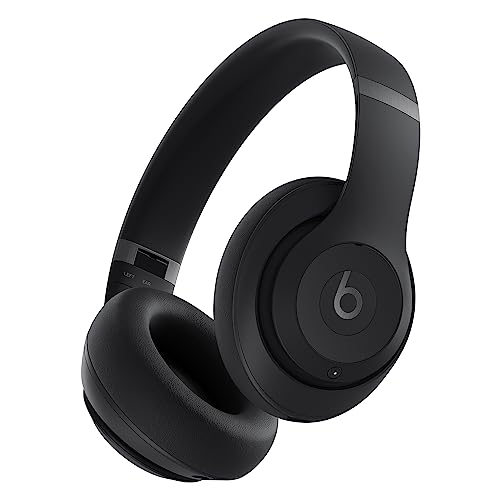
Beats Studio Pro Wireless Over-Ear Headphones
Best for: Travelers needing long battery life and ANC
- Form Factor
- Over-Ear (what this guide is about)
- Noise Cancellation
- ANC, Transparency mode
- Battery Life
- Up to 40 hours
- Connectivity
- Class 1 Bluetooth, USB-C, 3.5 mm
- Audio Features
- Spatial Audio, Lossless audio
- Noise Cancellation Type
- Active Noise Cancelling
View on Amazon: Beats Studio Pro Wireless Over-Ear Headphones Affiliate link
These over-ear headphones offer up to 40 hours of battery life and active noise cancellation. They support lossless audio via USB-C and include spatial audio with head tracking. The design features UltraPlush cushions for comfort. You get one-touch pairing for Apple and Android devices. This model suits travelers and commuters who need long battery life and clear call performance with voice-targeting mics.
Pros
- Up to 40-hour battery life with Fast Fuel charging
- Active noise cancellation and Transparency mode
- Lossless audio support via USB-C
- Spatial Audio with personalized dynamic head tracking
- Voice-targeting mics for clear calls
Cons
- Heavier build at 9.17 ounces compared to lighter alternatives
- No dedicated physical remote for playback control
- Lacks a companion app for EQ customization in the provided data
Good fit if
- You need up to 40 hours of listening time
- You want active noise cancellation for travel
- You use both Apple and Android devices
Skip if
- You prefer lightweight bone conduction headphones
- You need open-ear designs for situational awareness
- You want a headband-style sleep headphone
Verdict: Beats Studio Pro Over-Ear Headphones deliver solid battery life and noise cancellation for travelers. You should buy them if you prioritize long playtime and multi-device pairing over ultra-lightweight comfort.

SHOKZ OpenRun Air 2 Bone Conduction Headphones
Best for: Runners needing situational awareness
- Form Factor
- Bone Conduction (what this guide is about)
- Battery Life
- 10 hours
- Connectivity
- Bluetooth 6.0
- Water Resistance
- IP67
- Audio Features
- PremiumPitch 3.0
- Recommended Use
- Running
View on Amazon: SHOKZ OpenRun Air 2 Bone Conduction Headphones Affiliate link
The SHOKZ OpenRun Air 2 uses bone conduction to deliver sound through your cheekbones, keeping your ears open to surroundings. It weighs 26.4 grams and measures 3.96 by 4.77 by 1.73 inches. Bluetooth 6.0 connectivity supports 10 hours of playtime. An IP67 rating protects against water and dust. This open-ear design suits runners who need situational awareness.
Pros
- Weighs just 26.4 grams for lightweight comfort
- IP67 water-resistant rating for rain or sweat
- 10 hours of battery life with quick charge
- Bluetooth 6.0 connectivity for stable pairing
Cons
- Sound quality relies on bone conduction, which may feel unusual
- No included carrying case in the specifications
- Physical buttons only, no touch controls
Good fit if
- You run outdoors and need to hear traffic
- You want lightweight headphones that do not block ears
- You exercise in rainy or sweaty conditions
Skip if
- You need deep bass response for music
- You require active noise cancellation for flights
- You prefer in-ear earbuds for isolation
Verdict: SHOKZ OpenRun Air 2 Bone Conduction is a secure, water-resistant option for runners who prioritize environmental awareness over isolated audio. It fits athletes who value lightweight comfort and long battery life during outdoor training.
Specifications side by side
| Spec | Bose QuietComfort Wireless Over-Ear Headphones | SHOKZ OpenRun Pro 2 Mini Bone Conduction Headphones | Soundcore V20i Open-Ear True Wireless Earbuds | MUSICOZY Bluetooth Sleep Headband | Beats Studio Pro Wireless Over-Ear Headphones | SHOKZ OpenRun Air 2 Bone Conduction Headphones |
|---|---|---|---|---|---|---|
| Noise Cancellation | Quiet and Aware Modes | not stated | not stated | not stated | ANC, Transparency mode | not stated |
| Form Factor | Over-ear | Open-ear | Open-Ear | Headband | Over-ear | Open-ear, bone conduction |
| Battery Life | Up to 24 hours | 12 hours | 36 hours | Up to 15 hours | Up to 40 hours | 10 hours |
| Connectivity | Bluetooth Multipoint, wired | Bluetooth | Bluetooth 5.4 | Bluetooth 5.4 | Class 1 Bluetooth, USB-C, 3.5 mm | Bluetooth 6.0 |
| Driver Size | not stated | not stated | 16 mm | 40 mm | not stated | not stated |
| Water Resistance | not stated | IP55 | IP55 | Sweat-resistant | not stated | IP67 |
| Audio Features | not stated | 3D audio | Spatial Audio | not stated | Spatial Audio, Lossless audio | PremiumPitch 3.0 |
| Noise Cancellation Type | not stated | not stated | not stated | not stated | Active Noise Cancelling | not stated |
| Recommended Use | not stated | Sports, Running | not stated | Sports, Workout, Sleeping, Running, Side Sleepers | Travel | Running |
| Color | Cypress Green | Black | Black | Dark Black | Black | Black |
| Dimensions | 3.15 × 6.18 × 7.68 inches | 4.88 × 1.78 × 3.94 inches | 1.61 × 1.97 × 0.51 inches | 3.9 × 3.5 × 0.7 inches | 7.01 × 3.07 × 7.13 inches | 4.77 × 3.96 × 1.73 inches |
| Weight | 8.4 ounces | 1.06 ounces | 2.69 ounces | 2.88 ounces | 9.17 ounces | 0.93 ounces |
| Size | Regular | Mini | Standard | One Size | One Size | Standard |
| Model | 884367-0300 | SHOKZ S821 | A3876 | GH01 | MQTP3DN/A | SHOKZ S610 |
Frequently asked questions
Which form factor is best for running?
Bone conduction and open-ear designs are ideal for runners. The SHOKZ OpenRun Pro 2 Mini uses a hybrid driver system to deliver audio without blocking ambient sound. This keeps you safe during outdoor activities. The Soundcore V20i Open-Ear Earbuds also allow environmental awareness. These styles prioritize situational awareness over deep sound isolation.
Do over-ear headphones block outside noise?
Yes, they provide passive noise isolation through physical seals. The Bose QuietComfort Wireless Over-Ear Headphones feature large cushions that fully enclose your ears. This design creates a tight seal around the ear cup. It helps you focus in noisy environments. Some models, like the Beats Studio Pro, also include active noise cancellation for stronger reduction.
Are bone conduction headphones good for sleeping?
They are not the best choice for side sleepers. The SHOKZ OpenRun Air 2 is designed for running and sports. It is water-resistant and lightweight. For sleeping, a headband form factor is better. The MUSICOZY Bluetooth Sleep Headband offers a flat, wireless audio solution. It is specifically designed to be comfortable for side sleepers.
Which headphones are lightest for workouts?
Bone conduction options are extremely lightweight. The SHOKZ OpenRun Air 2 weighs only 0.93 ounces. The SHOKZ OpenRun Pro 2 Mini weighs 1.06 ounces. These models offer secure fits for athletes. They prioritize comfort during outdoor training. Open-ear earbuds like the Soundcore V20i also weigh very little at 2.69 ounces for the pair.
How long do over-ear headphones last on a charge?
Battery life varies by model. The Beats Studio Pro Wireless Over-Ear Headphones offer 40 hours of playtime. This is ideal for travelers needing long battery life. The Bose QuietComfort Wireless Over-Ear Headphones provide 24 hours of battery life. Both support wireless connectivity for easy use during long sessions or commutes.
Can I use open-ear buds for outdoor activities?
Yes, they are designed for situational awareness. The Soundcore V20i Open-Ear True Wireless Earbuds fit active users who need to stay aware of their environment. They feature an adjustable design for a secure fit. These earbuds allow you to listen to music while remaining alert to traffic and surroundings during outdoor use.