JBL Endurance Race 2 vs JBL Endurance Peak 4 Wireless (2026): Key Differences
As an Amazon Associate we earn from qualifying purchases. Links on this page are affiliate links.
You are comparing the jbl endurance race 2 vs endurance peak 4 wireless to find the best sport earbuds. Both models offer IP68 water and dust resistance, ensuring durability during intense workouts. They also share similar battery life and noise cancellation features. The main difference lies in their physical design. The Race 2 uses a standard in-ear fit, while the Peak 4 includes secure ear hooks. This structural choice affects comfort and stability for different types of users.
Key differences
| Aspect | JBL Endurance Race 2 Blue | JBL Endurance Peak 4 Wireless Sport Earbuds |
|---|---|---|
| Form Factor | In-ear with ergonomic wing enhancer | In-ear with liquid silicone ear hooks and memory wire |
| Driver Size | 6.8mm dynamic drivers | 10mm dynamic drivers |
| Microphones | 4 mics total (2 per earbud) | 6 mics total (3 per earbud) |
| Noise Cancellation Type | Active Noise Cancelling | Adaptive Noise Cancelling |
| Audio Customization | 6 Sports Modes and Relax Mode | Personi-fi 3.0 and preset activity modes |
Which one should you choose?
Choose JBL Endurance Race 2 Blue if
- You prefer a lightweight in-ear design without external hooks
- You want included charging cables and a compact form factor
- You prioritize a simpler fit for general running
Choose JBL Endurance Peak 4 Wireless Sport Earbuds if
- You need extra security from ear hooks during high-intensity movement
- You want larger drivers for potentially deeper bass response
- You value personalized sound profiles via Personi-fi 3.0
Verdict: The JBL Endurance Race 2 suits those who prefer a minimalist, hook-free fit. The Endurance Peak 4 is better for users needing maximum stability through ear hooks and personalized audio tuning. Your choice depends on whether you prioritize physical security or simplicity.
JBL Endurance Race 2 vs Peak 4
driver size and sound
The JBL Endurance Peak 4 features a larger 10mm dynamic driver compared to the 6.8mm driver in the Endurance Race 2. This larger driver in the Peak 4 contributes to its Spatial Sound capabilities and deeper bass response. The Race 2 relies on JBL Pure Bass technology with its smaller driver. If you prefer richer, more immersive stereo sound with customizable audio via Personi-fi 3.0, the Peak 4 has the advantage. The Race 2 delivers clear audio but lacks the larger driver size that enhances low-frequency depth in the Peak 4 model.
microphone count
Call clarity depends heavily on microphone quality and quantity. The JBL Endurance Peak 4 includes six microphones in total, with three mics per earbud. This setup uses beamforming algorithms to suppress ambient noise effectively. The JBL Endurance Race 2 has four microphones, with two per earbud. While the Race 2 mics cancel noise, the Peak 4 offers more sensors to isolate your voice. For frequent calls during outdoor runs, the six-mic array in the Peak 4 provides superior voice intelligibility and wind noise reduction compared to the four-mic system.
fit and comfort
Both earbuds use TwistLock technology for a secure fit, but the physical design differs. The Endurance Peak 4 features liquid silicone ear hooks with memory wire, known as OvalTubes. These hooks wrap around the ear for a stable, all-day secure fit. The Endurance Race 2 uses ergonomic wing enhancers instead of hooks. Wings sit inside the ear canal area, which may feel different for users who prefer external hooks. If you want the most secure hold during intense movement, the Peak 4 ear hooks offer a distinct advantage over the Race 2 wings.
noise cancellation type
Both models offer Active Noise Cancelling and Smart Ambient modes. The JBL Endurance Peak 4 specifies Adaptive Noise Cancelling, which likely adjusts dynamically to your environment. The Endurance Race 2 lists standard Active Noise Cancelling. Both allow you to control how much outside sound you hear via the app. The Peak 4 uses four noise-sensing mics to assist this process. While both provide essential noise isolation, the Adaptive label on the Peak 4 suggests a more responsive cancellation system than the fixed ANC in the Race 2.
battery and charging
Both earbuds provide up to 12 hours of playback from the earbuds alone, plus three additional charges in the case for a total of 48 hours. Both support speed charging, giving four hours of playtime from a 10-minute charge. However, the Race 2 includes the USB Type-C charging cable in the box. The Peak 4 data notes that the charging cable is not included. For immediate use out of the box, the Race 2 is more convenient since it comes with the necessary cable. Otherwise, battery performance is identical.
Which JBL Sport Earbuds Fit You
Runner needing maximum stability
The Peak 4 includes liquid silicone ear hooks with memory wire. This TwistLock design keeps the earbuds secure in your ears during intense movement. The OvalTubes provide a comfortable, adaptable fit that you may forget you are wearing, ensuring they stay in place while you run or train hard.
Caller in windy conditions
Peak 4 features three mics per earbud, totaling six microphones. This array uses beamforming algorithms to suppress ambient noise and reduce distortion from air friction. The windproof design ensures your voice remains intelligible and clear, even during outdoor runs on breezy days, offering superior call quality over the Race 2.
User wanting compact case
The Race 2 charging case is significantly smaller and lighter. It measures 1.7 inches wide and weighs 1.9 ounces total. The Peak 4 case is much bulkier at 4 inches wide and 3.52 ounces. If you prefer a portable case that is easier to carry in a pocket or small bag, the Race 2 is the better choice.
The products compared

JBL Endurance Race 2 Blue
Best for: intense workouts and outdoor activities
- Noise Cancellation
- Active Noise Cancelling
- Total Battery Life
- 48 hours (ANC off)
- Single Charge Battery
- 12 hours (ANC off)
- Driver Size
- 6.8mm
- Water Resistance
- IP68 (earbuds), IPX2 (case)
- Transparency Mode
- Smart Ambient, Ambient Aware
View on Amazon: JBL Endurance Race 2 Blue Affiliate link
The JBL Endurance Race 2 earbuds feature IP68 waterproof and dustproof ratings, making them suitable for tough workouts. They offer 48 hours of total playback with speed charging. Active Noise Cancelling and Smart Ambient modes help you control your listening environment. Six millimeter dynamic drivers deliver JBL Pure Bass sound. Four microphones ensure clear calls. This model suits users who need durable, sweat-resistant earbuds for active use.
Pros
- IP68 waterproof and dustproof rating for earbuds
- 48 hours total playback with charging case
- Active Noise Cancelling and Smart Ambient modes
- Twistlock ergonomic wing enhancer for stability
- Four microphones for clear calls
Cons
- Charging case is only IPX2 water-resistant
- No explicit mention of wireless charging support
- Requires drying earbuds before charging to prevent damage
Good fit if
- You need earbuds with high waterproof ratings for intense exercise
- You want long battery life for extended use
- You prefer a secure fit with wing enhancers
Skip if
- You require a fully waterproof charging case
- You prefer earbuds without a physical fit adjustment mechanism
- You need wireless charging capability
Verdict: JBL Endurance Race 2 Blue earbuds provide robust protection and long battery life for active users. They are ideal for those who prioritize durability and secure fit during workouts.
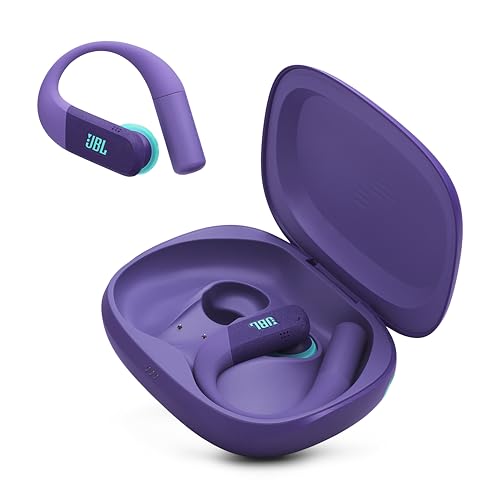
JBL Endurance Peak 4 Wireless Sport Earbuds
Best for: Runners needing IP68 durability and long battery
- Noise Cancellation
- Adaptive Noise Cancelling
- Total Battery Life
- Up to 48 hours
- Single Charge Battery
- Up to 12 hours
- Driver Size
- 10 mm
- Water Resistance
- IP68
- Transparency Mode
- Smart Ambient
View on Amazon: JBL Endurance Peak 4 Wireless Sport Earbuds Affiliate link
The JBL Endurance Peak 4 offers IP68 water and dust resistance for rigorous sports use. It features Adaptive Noise Cancelling with Smart Ambient transparency and a secure TwistLock fit with liquid silicone ear hooks. You get up to 48 hours of total playback with a 10mm dynamic driver. The JBL Headphones app allows for custom sound profiles and Relax Mode.
Pros
- IP68 waterproof and dustproof rating
- Up to 48 hours total battery life
- Adaptive Noise Cancelling with Smart Ambient
- TwistLock secure fit design
Cons
- Charging cable not included
- Battery life drops with ANC on
- No heart rate sensor mentioned
Good fit if
- You need IP68 protection for sweat and rain
- You want long battery life for travel
- You prefer a secure ear hook fit
Skip if
- You need a charging cable in the box
- You want a heart rate sensor
- You prefer a standard in-ear tip fit
Verdict: JBL Endurance Peak 4 Sport Earbuds are ideal for runners who need durable, water-resistant gear with long battery life and secure fit.
Specifications side by side
| Spec | JBL Endurance Race 2 Blue | JBL Endurance Peak 4 Wireless Sport Earbuds |
|---|---|---|
| Noise Cancellation | Active Noise Cancelling | Adaptive Noise Cancelling |
| Total Battery Life | 48 hours (ANC off) | Up to 48 hours |
| Single Charge Battery | 12 hours (ANC off) | Up to 12 hours |
| Driver Size | 6.8mm | 10 mm |
| Water Resistance | IP68 (earbuds), IPX2 (case) | IP68 |
| Transparency Mode | Smart Ambient, Ambient Aware | Smart Ambient |
| Connectivity | Wireless, True Wireless | Wireless |
| Recommended Use | Sports | Sports |
| Color | Blue | Purple |
| Dimensions | 2.74 × 1.7 × 1.2 inches | 6.5 × 4 × 2 inches |
| Weight | 1.9 ounces | 3.52 ounces |
| Model | JBLENDURACE2BLUAM | JBLENDUPEAK4PURAM |
| Size | not stated | One Size |
Frequently asked questions
Which JBL earbuds are better for intense workouts?
The JBL Endurance Race 2 is designed for intense workouts and outdoor activities. It offers robust protection and a secure fit. The Endurance Peak 4 is also built for sports but is specifically ideal for runners. Both models provide IP68 durability and long battery life to support active use.
What is the size difference between the two models?
The JBL Endurance Race 2 measures 1.7 inches wide, 1.2 inches high, and 2.74 inches long. It weighs 1.9 ounces. The Endurance Peak 4 is larger, measuring 4 inches wide, 2 inches high, and 6.5 inches long. It weighs 3.52 ounces, making it noticeably heavier and bulkier.
Are these earbuds wireless?
Yes, both the JBL Endurance Race 2 and the Endurance Peak 4 are wireless. The Race 2 supports True Wireless connectivity. The Peak 4 also offers wireless performance. You can use them without tangled cords during your daily activities or exercise routines.
What colors are available for these models?
The JBL Endurance Race 2 is available in Blue. The JBL Endurance Peak 4 is available in Purple. You can choose the color that best matches your personal style or preference when selecting between these two sport earbuds.
Do these earbuds have water resistance?
Yes, both models feature IP68 water and dust resistance. This rating ensures durability during intense workouts and exposure to elements. You can use them confidently in various weather conditions without worrying about damage from sweat or rain.
Which model is better for runners?
The JBL Endurance Peak 4 is ideal for runners needing durability and long battery life. It includes liquid silicone ear hooks with memory wire for a secure fit. The TwistLock design keeps the earbuds stable during intense movement, providing a comfortable and adaptable experience.
How do the driver sizes compare?
The JBL Endurance Peak 4 features a larger 10mm dynamic driver. The Endurance Race 2 has a smaller 6.8mm driver. The larger driver in the Peak 4 contributes to its Spatial Sound capabilities, potentially offering a different audio profile compared to the Race 2.