Sony or Linsoul? Earbuds Compared in 2026
As an Amazon Associate we earn from qualifying purchases. Links on this page are affiliate links.
This sony vs linsoul earbud comparison looks at two distinct in-ear options. Both deliver sound through the ear canal, but their designs serve different needs. The Sony model uses a wireless neckband for mobile convenience, while the Linsoul option is a wired hybrid IEM built for detailed audio. You must choose between portable wireless freedom and high-fidelity wired precision based on your listening habits.
Key differences
| Aspect | Sony Neckband Wireless In-Ear Headphones | Linsoul Hybrid 5-Driver In-Ear Monitors |
|---|---|---|
| Connectivity | Wireless, Bluetooth | Wired |
| Battery Life | Up to 25 hours | Not listed |
| Water Resistance | IPX4 | Not listed |
| Driver Configuration | Not listed | 4BA+1DD Hybrid |
| Noise Isolation | Not listed | 26dB passive isolation |
Which one should you choose?
Choose Sony Neckband Wireless In-Ear Headphones if
- You need wireless freedom for daily commutes.
- You want splash-proof durability for workouts.
- You prefer long battery life without charging cables.
Choose Linsoul Hybrid 5-Driver In-Ear Monitors if
- You prioritize detailed, hi-fi audio reproduction.
- You want a secure fit for vigorous movement.
- You prefer wired reliability with no battery concerns.
Verdict: The Sony neckband suits users who value wireless convenience and water resistance for on-the-go listening. The Linsoul IEM is better for those seeking high-fidelity sound and passive noise isolation through a wired connection. Your choice depends on whether you prioritize mobility or audio detail.
Sony vs Linsoul Earbuds Compared
Connectivity type
The Sony WI-C100 uses Bluetooth for wireless freedom, letting you move without cables. It connects via Bluetooth to your phone or device. The Linsoul KZ ZS10 Pro is a wired in-ear monitor. It requires a direct cable connection to your audio source. This wired approach eliminates latency and battery concerns but limits mobility. You must choose between the convenience of wireless neckband freedom or the direct signal path of a wired IEM. Your choice depends on whether you prioritize untethered movement or a stable, cable-bound connection.
Battery life
Battery performance is a key differentiator here. The Sony WI-C100 offers up to 25 hours of playback on a single charge. This makes it suitable for long days or travel without needing to recharge frequently. The Linsoul KZ ZS10 Pro is a wired device. It does not have a built-in battery or require charging. It draws power directly from your audio source. If you value extended listening time without worrying about power, the Sony option provides clear utility. The Linsoul model requires no charging but lacks independent power storage.
Audio features
The Linsoul KZ ZS10 Pro features a hybrid driver setup with four balanced armatures and one dynamic driver. It uses upgraded 30095 drivers for highs and 50060 drivers for mids. The sound is described as transient, dynamic, and bright, with highs extended beyond 40kHz. It also includes a second-generation Tesla double magnetic dynamic unit. The Sony WI-C100 focuses on convenience with DSEE technology to restore high-frequency sounds lost in compression. The Linsoul offers a more complex acoustic design aimed at Hi-Fi detail, while Sony prioritizes compressed audio restoration.
Noise isolation
Passive noise isolation differs between the two. The Linsoul KZ ZS10 Pro is scientifically molded to fit the ear, effectively isolating noise by up to 26dB. This helps block out external distractions for focused listening. The Sony WI-C100 has an IPX4 rating for splash and sweat proofing but does not specify a decibel level for passive noise isolation. While the Sony design ensures a stable fit, the Linsoul explicitly quantifies its ability to block ambient sound, offering better passive isolation for noisy environments.
Recommended use
The intended use cases vary significantly. The Linsoul KZ ZS10 Pro is recommended for gaming and musicians. Its wired nature and hybrid driver configuration suit critical listening and low-latency needs. The Sony WI-C100 is designed for everyday wireless use, featuring a neckband for stability during movement. It includes a built-in mic for hands-free calling. If you need gear for music production or gaming, the Linsoul is specialized. For general mobile use and calls, the Sony neckband is more practical.
Which Sony or Linsoul Earbuds Suit You
Mobile users needing wireless freedom and battery life
You value moving without cables. The Sony WI-C100 offers Bluetooth connectivity for wireless use. It provides up to 25 hours of battery life on a single charge. The neckband design ensures a stable fit during movement. Splash-proof IPX4 protection handles sweat and light rain. You get hands-free calling and app-based sound tuning via the Sony | Headphones Connect app.
Audiophiles seeking detailed sound and wired reliability
You prioritize sound fidelity and driver configuration. The Linsoul KZ ZS10 Pro features a hybrid setup with four balanced armatures and one dynamic driver. This creates transient, dynamic, and bright sound with highs extended beyond 40kHz. The PCB dividing board ensures smooth, detailed music reproduction. It is designed for Hi-Fi listening and offers up to 26dB of passive noise isolation.
Gaming or studio work requiring precise audio
You need accurate audio for gaming or musicians. The Linsoul KZ ZS10 Pro is recommended for gaming and musician use. Its hybrid driver configuration delivers bright resolution and dynamic lows. The wired connection ensures zero latency. The custom-molded cavity fits securely for long sessions. Detachable gold-plated ODC cables allow for future upgrades and maintenance.
The products compared

Sony Neckband Wireless In-Ear Headphones
Best for: Casual listeners needing secure fit
- Single Charge Battery
- Up to 25 hours
- Water Resistance
- IPX4
- Form Factor
- In-Ear
- Connectivity
- Wireless, Bluetooth
- Color
- White
- Dimensions
- 2.76 × 0.75 × 6.3 inches
View on Amazon: Sony Neckband Wireless In-Ear Headphones Affiliate link
The Sony WI-C100 is a wireless in-ear headphone with a neckband design. It offers up to 25 hours of battery life on a single charge. The IPX4 rating makes it splash-proof and sweat-proof. You can fine-tune your sound using the Sony Headphones Connect app. DSEE technology helps restore high-frequency sounds lost in compression. This model suits users who want stable fit and decent battery life.
Pros
- Up to 25 hours of battery life
- IPX4 splash-proof and sweat-proof rating
- DSEE restores high-frequency sounds
- App control for sound tuning
Cons
- No active noise cancellation
- Wired connection not available
- Single driver configuration limits detail
Good fit if
- You need a secure neckband fit
- You want splash-proof durability
- You prefer app-based sound tuning
Skip if
- You require active noise cancellation
- You need wired connectivity
- You want multi-driver detail
Verdict: Sony WI-C100 Wireless In-Ear is a practical option for users prioritizing battery life and secure fit over critical listening detail. It fits casual listeners who value convenience and durability.
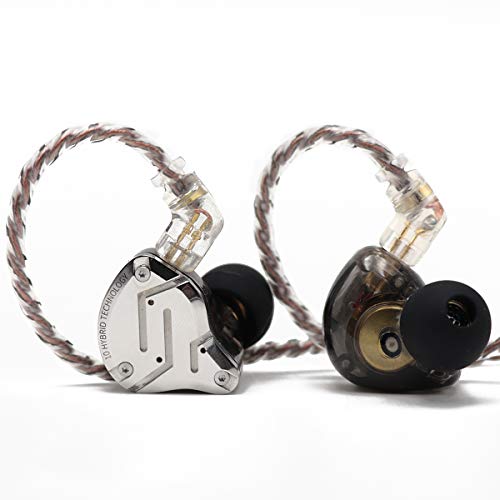
Linsoul Hybrid 5-Driver In-Ear Monitors
Best for: Detailed wired audio for gaming and music
- Noise Cancellation
- isolate the noise to 26dB
- Form Factor
- In-Ear
- Connectivity
- Wired
- Audio Features
- Hi-Fi
- Recommended Use
- Gaming, Musicians
- Microphone
- Microphone
View on Amazon: Linsoul Hybrid 5-Driver In-Ear Monitors Affiliate link
The Linsoul KZ ZS10 Pro uses a hybrid driver setup with four balanced armatures and one dynamic driver. It connects via a wired interface for Hi-Fi audio. The earbuds isolate noise up to 26dB. They feature a stainless steel faceplate and resin cavity. This design suits gamers and musicians who need detailed sound and a secure fit during use.
Pros
- Hybrid driver configuration with four balanced armatures and one dynamic driver
- Noise isolation up to 26dB
- Hi-Fi audio support for detailed sound
- Detachable gold-plated ODC cable for upgradability
Cons
- Wired connectivity requires a direct cable connection
- No active noise cancellation technology listed
- Includes microphone only in specific variations
Good fit if
- You want detailed audio resolution for music or gaming
- You prefer wired connections for low latency
- You need secure earbuds for vigorous activity
Skip if
- You require wireless Bluetooth connectivity
- You need active noise cancellation
- You want a single cable option guaranteed
Verdict: The Linsoul KZ ZS10 Pro Wired Earbuds deliver precise sound through its hybrid drivers and secure fit. It is ideal for listeners who prioritize audio detail and wired reliability over wireless convenience.
Specifications side by side
| Spec | Sony Neckband Wireless In-Ear Headphones | Linsoul Hybrid 5-Driver In-Ear Monitors |
|---|---|---|
| Noise Cancellation | not stated | isolate the noise to 26dB |
| Single Charge Battery | Up to 25 hours | not stated |
| Water Resistance | IPX4 | not stated |
| Form Factor | In-Ear | In-Ear |
| Connectivity | Wireless, Bluetooth | Wired |
| Audio Features | not stated | Hi-Fi |
| Recommended Use | not stated | Gaming, Musicians |
| Microphone | not stated | Microphone |
| Driver Type | not stated | Hybrid Driver |
| Color | White | Black |
| Dimensions | 2.76 × 0.75 × 6.3 inches | 3.74 × 2.76 × 1.18 inches |
| Weight | 0.7 ounces | not stated |
| Size | One Size | One Size |
| Model | WIC100/W | KZ ZS10 Pro |
Frequently asked questions
Which Sony or Linsoul earbuds are best for gaming?
The Linsoul KZ ZS10 Pro is the better choice for gaming. It features a hybrid driver setup that delivers precise sound details. The product data recommends it specifically for gaming and musicians. Its wired connection ensures low latency, which is critical for in-game audio cues. The Sony option focuses on casual listening and convenience rather than competitive gaming performance.
Do Linsoul earbuds support Bluetooth connectivity?
No, the Linsoul KZ ZS10 Pro does not support Bluetooth. It is a wired in-ear monitor that requires a direct cable connection to your device. This design prioritizes audio fidelity and reliability over wireless freedom. If you need wireless capability, the Sony model offers Bluetooth connectivity for mobile use without cables.
Which model offers a more secure fit for exercise?
The Sony WI-C100 is designed for users needing a secure fit. It uses a neckband style that wraps around your neck, keeping the earbuds stable during movement. This makes it practical for casual listeners who value durability and convenience. The Linsoul model is a standard in-ear monitor, which may not stay as securely in place during vigorous activity.
Are these earbuds suitable for critical listening?
The Linsoul KZ ZS10 Pro is better for critical listening. It uses a hybrid driver configuration to deliver Hi-Fi audio with high detail. This makes it ideal for listeners who prioritize sound accuracy. The Sony model is described as a practical option for casual listeners, focusing on battery life and fit rather than critical audio detail.
What is the weight difference between the two models?
The Sony WI-C100 weighs 0.7 ounces. The Linsoul KZ ZS10 Pro weight is not specified in the product data. The Sony model includes a neckband, which adds weight compared to standard in-ear monitors. The Linsoul unit is a compact wired design. You should consider the weight distribution if you plan to wear them for extended periods.
Can I use these earbuds with a microphone?
The Linsoul KZ ZS10 Pro includes a microphone. This allows you to take calls or use voice chat while gaming or listening to music. The Sony model does not list a microphone in its attributes. It focuses on wireless audio playback. If you need hands-free communication, the Linsoul option provides this feature explicitly.